
Trout Telephone
2026
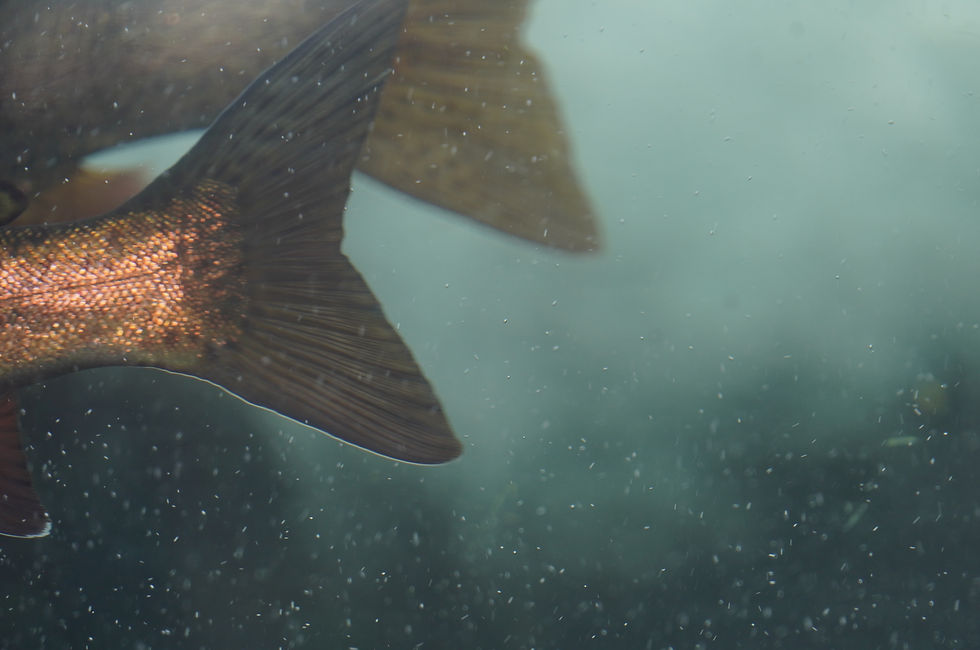
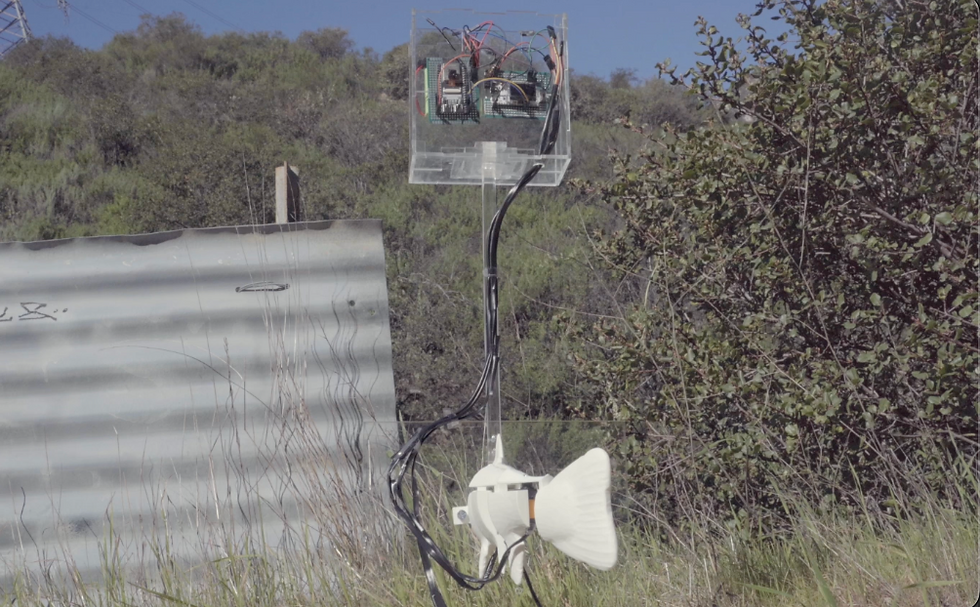
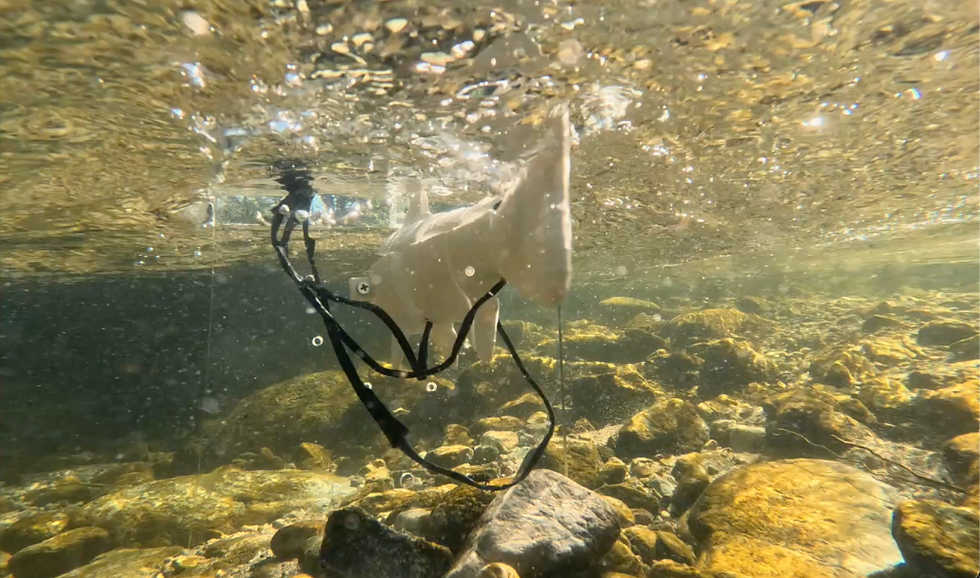
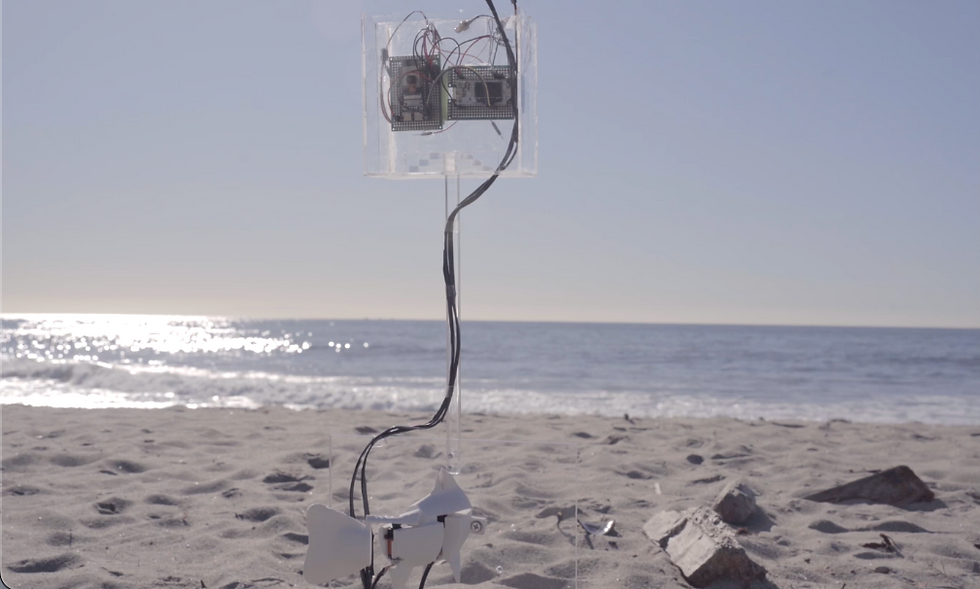
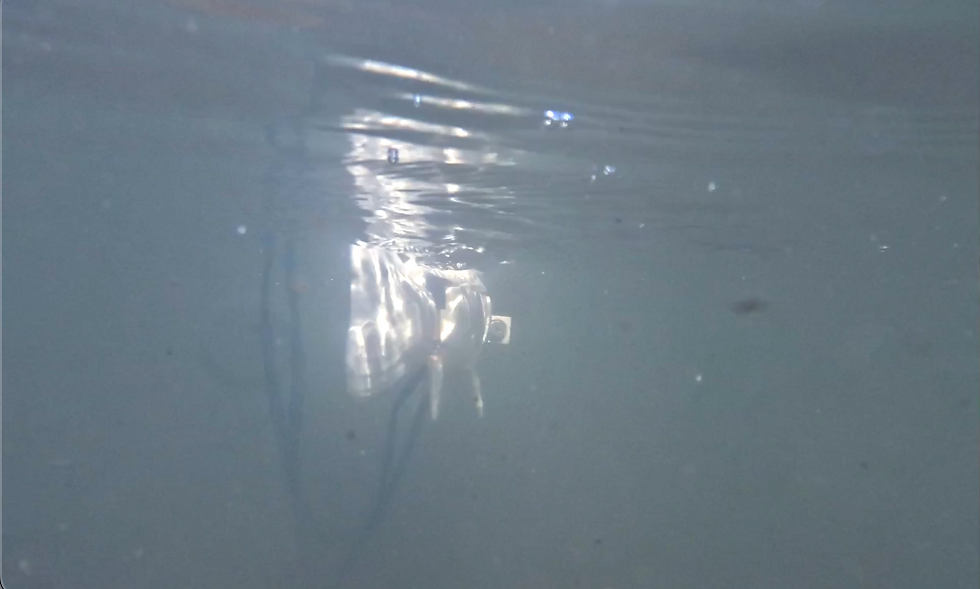
Trout Telephone is a telematic art installation that presents a communication system for trout across habitats fragmented by dam constructions. For millennia, trout have inhabited the Arroyo Seco watershed in the Los Angeles basin, migrating between a river surrounded by forest and the sea—an ancestral route now interrupted by human interventions and concrete infrastructures. Responding to this forced ecological separation, the work places two mechanical trout (actuated fish-tail sculptures) at the divided sites—one upstream in the forest and the other downstream in a lagoon, linking them through a real-time network that creates a call-and-response system between the distant extremes of the trout populations.
This project consists of an on-site installation, an experimental documentation, and an indoor gallery installation.
Installation, Video/
Telematic Art, Critical Ecology,
More-than-human Design


Gallery Installation

On-site Installation
Special Thanks
Zhiqian Zhou
Thomas Gillespie
Laurie MacDonald
Gareth Walsh

Grounded on painstaking field research done around the Devil’s Gate Dam in Los Angeles, the project centers on Oncorhynchus mykiss—a species that can remain as resident rainbow trout or migrate as anadromous steelhead—whose ocean & river life cycle is now constrained as the dam blocks the passage and cuts off the upstream/downstream contact.
As an artistic response to this ecological injustice typical of the anthropocene, each station functions as a sensing-and-signaling node built on a microcontroller with a camera. A vision edge AI model trained and deployed runs on-device to detect the trout presence in real time. When fish activity is detected, the signal is compressed into a low-bandwidth LoRa packet and transmitted to the counterpart site, where a servo-driven fish-tail sculpture performs a tail-beat pattern that simulates trout movement as messages to the local fish.
Rather than decoding the fish behavior, Trout Telephone foregrounds the ethics of more-than-human representations. Its message is minimal—presence becomes a wave rhythm—closer to aquatic sensing and trout communication. Drawing on theories of critical ecology, the work asks what it means to build technical systems for non-human perception and cognition, and how an infrastructure might communicate with—rather than extract from—beyond-human life. The audiences witness a fragile, absurd long-distance feedback loop: an alternative ecological connection staged through a telematic system designed primarily for fish.


Video Credits
Director: Peijing Mou, Charlotte Shiyun Liu, Wendy Xinran Tong
Camera: Charlotte Shiyun Liu, Peijing Mou
Field Recording: Wendy Xinran Tong
Editing: Peijing Mou
Sound: Ze Hu
Gallery Installation